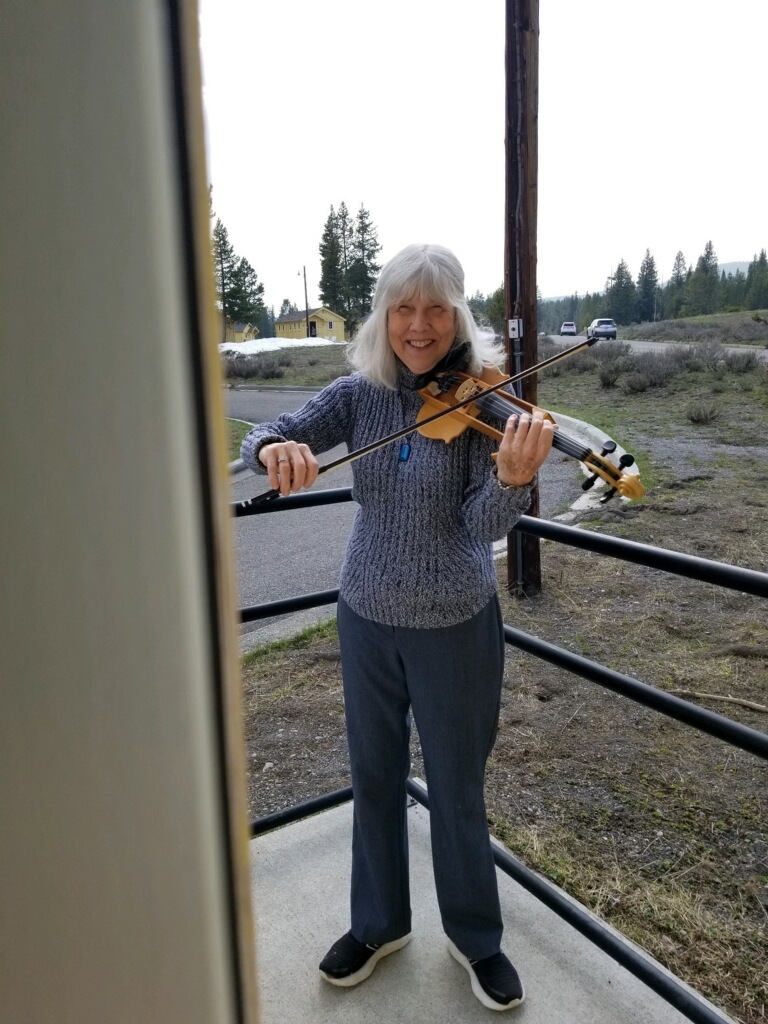
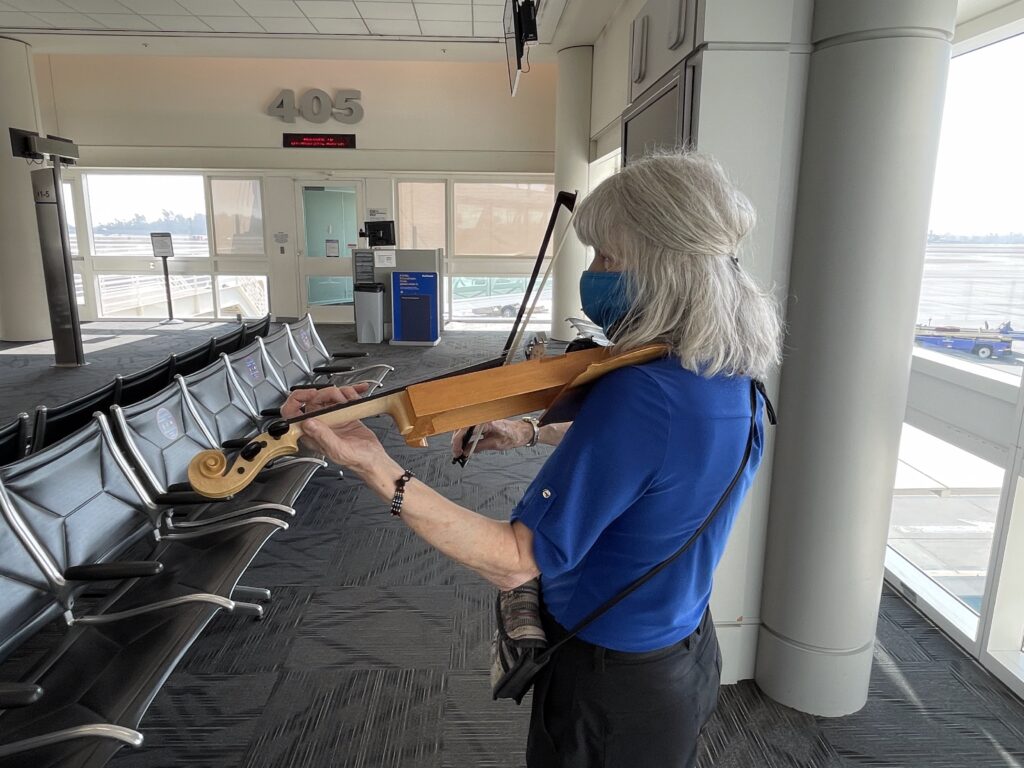
My first teacher was my mother, who studied music at Lewis and Clark College on the World War II GI Bill. Her method was to give me some basic instruction, and then a succession of books to learn. So I had to figure out a lot on my own. While this was a real disadvantage to becoming professional musician, it did mean that early on I developed the ability to analyze and solve musical problems, which enables me to analyze, solve problems, and explain skills to students.
Off and on I did have some private lessons, but mostly my violin and piano skills increased from participating in public school music programs, which sadly hardly exist now. My high school, however, had no school orchestra, so I joined the Choir which then taught me sight singing and ear training. I also played in city wide youth orchestras in Wisconsin and in Chicago, plus the Chicago Civic Orchestra, and these became my models for developing the Metropolitan Youth Symphony programs in Portland.
When I started playing in the Oregon Symphony, I was nonplussed that there was no collaboration between it and the local youth orchestras, and set to work to change that. From 1988-1996 I helped build the Metropolitan Youth Symphony from 2 ensembles with 60 youngsters to 5 ensembles with over 500 youngsters, arranging the first sectionals, writing bylaws, and organizing the first 4 international tours for this organization, and in general raising it’s profile in the community. After having never traveled further than Bend, MYS toured Western Europe, Eastern Europe, and Japan on tours staffed by volunteers, including me, who I recruited from friends, MYS parents, and Oregon Symphony colleagues. I also started inviting OSO conductors to guest conduct MYS rehearsals. I am gratified that now Oregon Symphony collaboration is well-established and taken for granted with Portland youth orchestras.
Early in my symphony career, I realized that survival as a professional musician was going to require not just musical, but political skills. I served at various times on Orchestra Players Committees, Contract Negotiating Teams, delegate to ICSOM, [International Conference of Symphony and Opera Musicians], Board member and then Vice President of Local 99 AFM [American Federation of Musicians.] Along the way I also got certified as an Oregon Mediator and Negotiator. I was Chair of the Oregon Symphony Players Committee during the upheaval of moving from a nighttime job in the Keller Auditorium to a daytime job in Schnitzer Auditorium. I established the first set of Oregon Symphony Players Bylaws. I mediated a controversial transition of fixed to rotating seating for the string sections, and expanded it to include rotation between First and Second Violins – a model for other orchestras.
Through the years, I have also traveled quite a bit in Europe, practicing German and Hungarian.
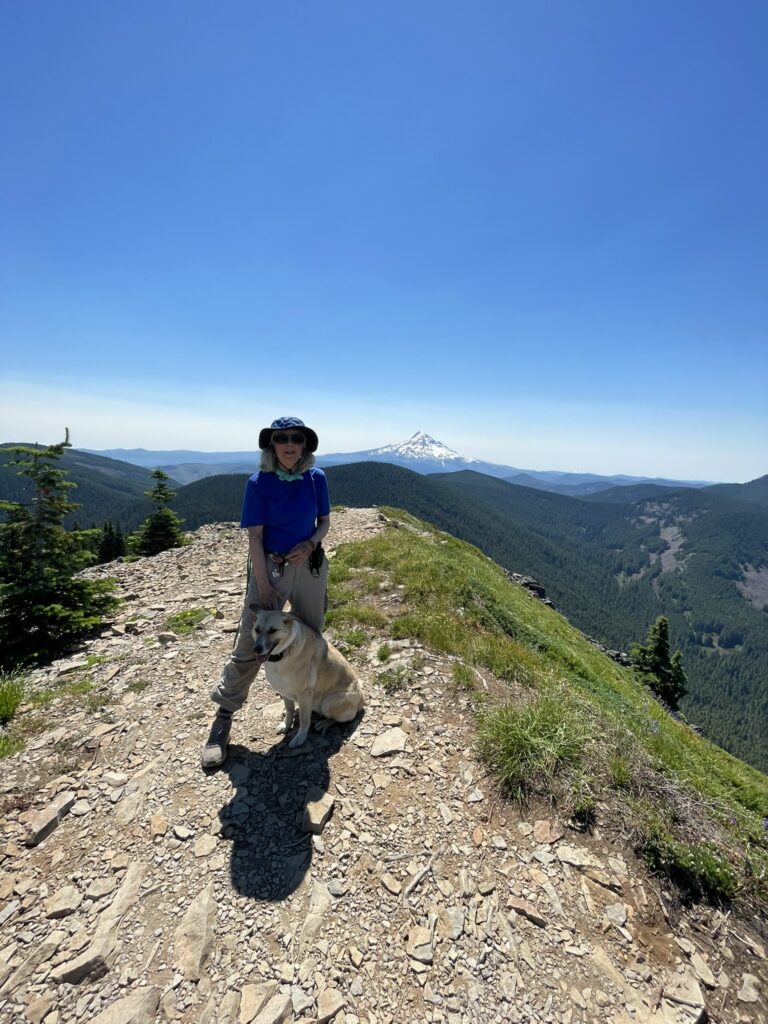
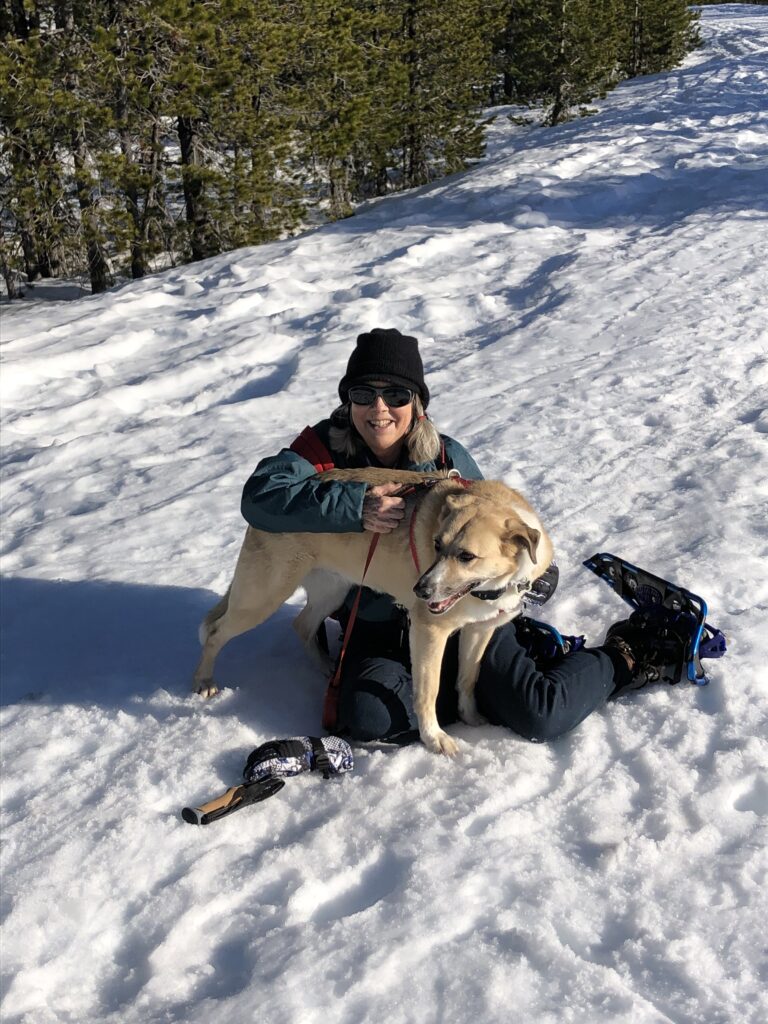
And I still like to relax by being out with my dog in the forests and mountains, hiking, camping, and swimming in rivers and lakes.
ESSAY ON MUSIC AND ORCHESTRAS
I used to think that there is music, which is nice, but then there is real life. Now I think that what we call real life is just events we muddle through as best we can, while music guides us to what life really is. Music is part of all the significant events of life. Marriages, memorial services, graduations – one of the first things we respond to it as babies – and sometimes about all we respond to in late stages of life. Music transcends cultures, because music is heart speaking to heart and all cultures have hearts.
Music goes where words fail: comforting, celebrating, inspiring, influencing, empowering. Let me talk more about music and power: consider the power of gospel music for enslaved people, of folk songs for unionists, of protest songs during the ’60s – 70s. The Singing Revolution in Estonia, and the Berlin Wall in 1989, which came down after 30 years including airlift and economic isolation, espionage, politics and diplomacy, aggression and games of chicken, The East German officials said they were prepared for everything…except candles and singing. Music is power-changing lives individually and collectively.
In Texas, I played in a Country Western band. I’m not a musical snob. But I do think that Classical music balances emotion and intellect in a special way, and that it reinforces our better natures. Oregon Symphony used to play at the State Fair, and the employees there said, “We really like symphony concerts because the audience picks up their trash.”
As a child my mother played classical LPs while working around the house. Kids of my generations at least heard classical sound tracks on the Saturday morning cartoons. People love what they grow up with, but now kids can grow up with scarcely any exposure to classical music. Statistically the best predictor of classical audience is people who were in choir or orchestra when young. Let’s get instruments into the hands of kids. A lot of cities don’t have a classical radio station anymore; we do. Support it. Use it at home, in the car-especially when youngsters are around.
And don’t accept fake music for shows and other audience events. Just as there is a difference between home cooked food from your garden and processed, pre-made quasi food full of artificial stuff, So in music, its important to recognize the difference between real and artificial. Its fine to expand the palette of sounds with creative electronics, but not fine as a substitute. Just as fake food doesn’t actually nourish the body, so fake music doesn’t really feed the soul.
The foundation of classical music in a city is its orchestra;. From its presence comes the network supporting teachers, mentors, free lancers, and amateurs. The magnificent symphonic repertoire is a peak of classical music tradition, which developed over centuries, passed on from generation to generation, teacher to student, colleague to colleague, conductor to ensemble. It can’t be done any other way-YouTube notwithstanding. This music works on us over a lifetime, and because we are all individuals, our expression and understanding of it is both individual and ever evolving throughout our lives. As musicians, the ball is passed to us; we learn how to play with it, maybe add a few new moves, and then pass it on.
I am now passing on the ball; don’t drop it.